Turn SEO blog bingers into MQLs with topic‑specific drips
Use Spreeflo journeys and behavioral segments to detect when someone binge-reads multiple posts on a specific SEO topic, then trigger a tailored email drip that delivers a deep guide, tags their interest, and turns engaged readers into MQLs.
Industry
Niche
Pattern
Loading sequence...
Someone just read three of your “technical SEO” posts back‑to‑back, then bounced with nothing more than a generic newsletter opt‑in. That isn’t “content marketing.” That’s wasted intent.
This playbook fixes that. You’ll track when a reader consumes 3+ posts on a single SEO topic, tag that interest, and automatically send a deep guide on that exact topic with an MQL‑level call to action. The sequence at the top of this page is the whole journey, end to end.
We’ll use a fictional SEO SaaS, BrieflySEO (content brief generator at ~$60k MRR), but you can swap in your own stack. The pattern stays the same whether you sell rank tracking, content briefs, or technical audits.
Why topic heat beats generic nurture
Your blog already clusters around themes:
Rank tracking and SERP volatility
Content brief workflows and on‑page optimization
Technical SEO: crawl budgets, Core Web Vitals, schema
Each theme maps neatly to product value and, often, to a specific plan or feature. When someone binge‑reads one of those lanes, they’re telling you their project and timeline without saying a word.
Most teams ignore that and dump everyone into the same weekly newsletter. Result: low relevance, low CTR, and a quiet leak in lifetime value.
A topic‑specific behavioral drip does three things:
Captures detail on every reader: which topic they care about enough to binge.
Responds with a guide that feels 1:1, not broadcast.
Promotes deep product usage or high‑intent actions (trials, audits, demos) tied to that topic.
For founder‑led SEO SaaS, this is how you stop your content library from being a passive traffic engine and start letting it qualify leads for you.
Step 0: Set up tracking so “3+ reads” is real
Before you can fire a journey on “read three technical SEO posts,” you need page‑view data flowing into Spreeflo.
Install the Spreeflo SDK on your marketing site Follow the web tracking and analytics guide to drop the JS snippet into your blog layout. Once it’s live, Spreeflo automatically records page views and sessions.
Decide how you’ll identify topic clusters You have two realistic options:
Keep in mind plan limits On the Professional plan, you can segment and trigger automations directly from web activity. That’s what we’ll use here.
URL patterns: e.g.
/blog/technical-seo/…,/blog/rank-tracking/…Page titles containing a keyword, e.g. “Technical SEO”
Most SEO blogs already use clean category URLs, so we’ll assume that.
Once that’s in place, you can build criteria like “Page Visited URL contains /technical-seo at least 3 times in the last 30 days” using Spreeflo’s segment builder.
Step 1: Pick the topics that actually map to revenue
Do not build this for every tag in your CMS. Start with 3–5 topics that:
Have a cluster of 5+ strong posts already
Map clearly to a feature, use case, or plan
Attract readers who could convert in the next 30–60 days
For BrieflySEO, that might be:
“Content briefs” (core product)
“Topic clusters” (multi‑keyword briefs; higher‑tier plan)
“Technical SEO content” (briefs for dev‑heavy pieces; team plans)
We’ll walk through the “Technical SEO content” journey. You’ll clone this pattern for each topic category you care about.
Step 2: Build the technical SEO deep‑dive journey
You’ll build this as a journey in Spreeflo’s visual editor, not a one‑off campaign, so it keeps running for new readers. If you haven’t used the canvas before, the overview on how to build a journey is a good primer.
The high‑level flow:
Trigger when someone reads 3+ technical SEO posts.
Tag them with that interest.
Send a deep technical SEO guide email.
Wait a few days.
Branch based on whether they clicked, opened, or ignored it.
Treat clickers as MQLs and nudge the rest differently.
Let’s go node by node.
2.1 Trigger: Criteria Match on 3+ reads
Node type: Criteria Match trigger.
Configuration:
Criteria: build this with the segment builder:
Group connector: AND
Rule 1: Email subscription status is Subscribed
Rule 2: Page Visited
URL contains
/blog/technical-seo/Frequency: at least 3 times
Time window: in the last 30 days
Re-enrollment: keep this off. Once they’ve gone through this journey, you don’t need to re‑send the same guide every time they cross three visits again.
Why this matters:
The Page Visited rule captures only real binge behaviour, not a one‑off hit.
The 30‑day window localizes interest. Someone who read three posts a year ago doesn’t get dragged into a fresh drip.
Checking subscription status avoids trying to email people who cannot legally or technically receive marketing email.
2.2 Tag the topic interest
Node type: Add Tag action.
Apply tags like:
topic:technical-seotopic_drip:technical-seo_started
This is where the “topic‑tag accumulation” metric comes from. Over time, you’ll see how many contacts are tagged for each topic. You can review and slice by tags later via the getting started with tags guide.
Why tag here:
Tags snapshot interest at the moment it becomes clear (3+ reads).
You can reuse them in other journeys, segments, or even ad audiences down the line.
They act as a guardrail; you can add “contact is not tagged with
topic_drip:technical-seo_started” to avoid double‑triggering variants.
Set Force tag trigger to off unless you’re deliberately using Added Tag triggers elsewhere; here, the natural tag event is enough.
2.3 Send the deep guide email
Node type: Send Email action.
This is the core of the pattern: a single, high‑value email that feels like “you’ve been reading a lot about technical SEO; here’s the complete playbook.”
Configuration:
Template: create a dedicated marketing email in the email builder, e.g. “Technical SEO content roadmap”.
Send only once: leave this on. You never want a contact to receive this email twice, even if you later rewire the journey.
Content:
Open by acknowledging their interest: “You’ve been reading our technical SEO content a lot lately. Here’s the full roadmap we use with agency clients.”
Link to your best technical SEO guide or pillar page.
Tie each major section to a product action: generating a technical brief, auditing existing content, exporting issues to dev, etc.
End with a clear CTA that qualifies them: start a trial, run a sample audit, or book a working session.
Spreeflo’s AI features and email builder help you personalize this without writing from scratch every time, but the key is relevance: one topic, one deep answer.
2.4 Wait before judging engagement
Node type: Time Delay action.
Configuration:
Delay: 3 days
Unit: Days
This spacing serves two purposes:
It keeps you compliant with good sending etiquette. There’s no back‑to‑back email on a path; you’ve given them time to read, click, and explore.
It gives meaningful signal for the next step: “clicked within 3 days” is a stronger intent indicator than “clicked eventually.”
You can stretch this to 5–7 days if your audience is slower‑moving (enterprise buyers, agency owners with hectic calendars). Under a day is usually too tight for a deep guide.
2.5 Branch on how they engaged with the guide
Node type: Check Email Activity process.
Configuration:
Marketing email: select the deep technical SEO guide you sent above.
Activities to branch on:
Branch A: Clicked
Branch B: Opened
Branch C: Not Opened
Spreeflo automatically adds an “Else” branch, but in this case your three named branches already describe the outcomes you care about.
Why this split:
Clickers treated as high‑intent. They didn’t just skim; they followed your guide to somewhere.
Opened‑only readers showed interest but not enough to act. They may need a simpler or more tactical follow‑up.
Non‑openers either missed it or weren’t ready. You can re‑try once with a different angle or quietly step back.
Now we’ll design each branch.
Step 3: Turn clickers into MQLs
For the Clicked branch:
3.1 Tag as topic‑qualified
Node type: Add Tag action.
Tags to add:
topic:technical-seo_engagedmql:technical-seo
This is your “MQL conversion” metric for this journey: how many contacts move from “interested” to “engaged enough to click the deep guide.”
You can later build a segment like “tagged with mql:technical-seo” to see how many trials, upgrades, or deals come from this flow.
3.2 Notify yourself or the team
Node type: Send Internal Email action (optional but powerful).
Email content might include:
Who they are (name, company, plan)
What they clicked (technical SEO guide)
Suggested follow‑up (invite to run a technical content audit together)
For a tiny team, routing this to the founder’s inbox or a shared sales address is often enough. If you also run a CRM, you can use a Webhook action here (Professional plan) to post this MQL into your pipeline automatically.
You can end the branch here or add a longer‑term nurture later (case studies, comparison guides). Just remember the pacing rule: always put a Time Delay of at least one day before any additional Send Email node down this path.
Step 4: Nudge “opened but not clicked” readers
For the Opened branch:
These people were curious enough to open the guide but did not click. They might be:
Still evaluating you against competitors
Interested but overwhelmed by the depth
Skimming on mobile with intent to return
Two simple steps work well:
4.1 Short delay to avoid feeling robotic
Node type: Time Delay action.
Configuration:
2 days, unit: Days
You’ve already waited 3 days before checking activity; another couple of days keeps the touchpoints feeling natural rather than transactional.
4.2 Follow‑up email with a simpler offer
Node type: Send Email action.
Content idea:
Subject: “Quick technical SEO wins you can ship this week”
Body: 3–5 bullet‑point actions pulled from your larger guide, each grounded in your product:
“Run a brief for your slowest‑loading page.”
“Generate a schema checklist for your top three blog posts.”
CTA: a single, focused action like “Generate one technical SEO brief now” or “Run a free content health check.”
You’re not re‑sending the same guide. You’re offering a lighter on‑ramp that still moves them toward product value.
Step 5: Decide how to treat non‑openers
For the Not Opened branch:
You have two options that respect both your list and your time.
5.1 One respectful re‑send
If your audience is known for busy inboxes (agency owners, in‑house leads), a single re‑send can salvage plenty of missed opens.
Design:
Time Delay: 3–5 days.
Send Email: similar content, but with a different subject line and a shorter intro. Lead with the outcome: “The technical SEO content roadmap we use for 6‑figure traffic lifts.”
Keep Send only once on for the original guide email, and create this as a separate template so you’re not double‑sending the exact same asset.
5.2 Or quietly downgrade the interest
If you prefer a stricter engagement bar, skip the re‑send and just tag the contact:
Node type: Add Tag action.
Tag:
topic:technical-seo_unresponsive
This lets you:
Exclude them from more aggressive drips.
Build a segment later like “interested but unresponsive” for low‑frequency check‑ins.
Either way, you’re acting on behaviour rather than blasting them with the same message repeatedly.
Step 6: Repeat the pattern for other topics
Everything we just walked through can be cloned for other high‑value categories:
Rank tracking: trigger on “Page Visited contains
/blog/rank-tracking/at least 3 times,” send a deep guide on consistent rank measurement, CTA toward your rank‑tracking feature.Content briefs: trigger on content strategy posts, send a “How to run content briefs across a full funnel” playbook.
You can:
Create a separate journey per topic, each with its own Criteria Match trigger and topic‑specific tags.
Reuse the same structure: Add Tag → Send Email → Time Delay → Check Email Activity → per‑branch actions.
The advantage of separate journeys is clarity: a contact can go through multiple topic drips over time without any conflict, and your reporting per topic becomes trivial.
Step 7: Measure and optimize what matters
This pattern is only worth its slot in your brain and in your stack if it moves numbers you care about. Three metrics tie directly back to the pattern brief.
7.1 Topic‑tag accumulation
Measure:
How many contacts have each
topic:*tag?Which topics generate the most binge behaviour?
How does that shift after new content launches?
Operationally:
Build simple segments using the segment builder, like “tagged with
topic:technical-seo.”Track those counts month over month.
Insight:
If “content briefs” tags dwarf “technical SEO” tags, that’s a clear signal on where your market sees you today—and where to adjust content, onboarding, and even pricing pages.
7.2 Deep‑guide CTR
This is your journey’s heartbeat.
Look at click‑through rates on the deep guide email per topic.
Compare by audience slice: new visitors vs existing trial users vs paying customers.
If CTR is low:
Your guide might be mis‑positioned (“too 101” for advanced readers).
The subject line may not connect the email with the posts they just read.
The send timing could be off (try 24 hours after the third read vs immediately).
Small tests here—different subject lines via a Random Split node, or variant CTAs—can move the needle quickly.
7.3 MQL conversion
Define one simple rule for this journey:
“Contact is tagged
mql:technical-seo.”
Then answer:
What percentage of
topic:technical-seocontacts become MQLs?How many of those start trials, upgrade plans, or book calls within 30 days?
Because every step runs through one contact record in Spreeflo’s audiences, you can watch this entire funnel without stitching logs from multiple tools.
The quiet advantage of founder‑level detail
This pattern doesn’t require a big team. You design the journey once, wire up 3–5 emails, and let your content do the qualifying for you.
The payoff is disproportionate:
You capture fine‑grained interest (technical SEO vs rank tracking vs content strategy) instead of a single “SEO” bucket.
You stop leaking high‑intent readers into a generic newsletter that never speaks to why they came.
You give yourself, as founder, a shortlist of people who raised their hands by behaviour, not by filling out a form.
That is the kind of leverage founder‑led businesses win on: a bit of upfront thinking, captured in an automation, that keeps paying off every time someone binge‑reads your blog.
Wire up the journey from the sequence at the top of this page, start with one topic, and watch how many more of your SEO lurkers turn into real product conversations.
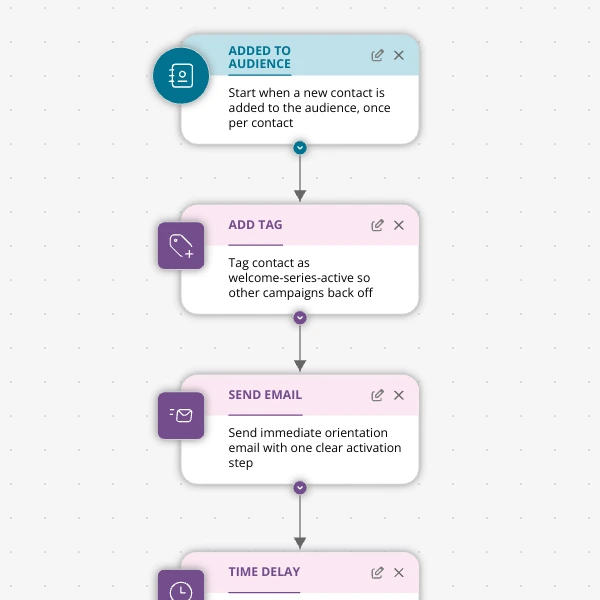
The Shopify app welcome series that turns installs into income
A step-by-step Shopify app welcome email journey for tools like CartSpark, showing how to turn new installs into activated, retained merchants using Spreeflo journeys, tags, and behavioral triggers so fewer trials quietly churn and more trials convert.
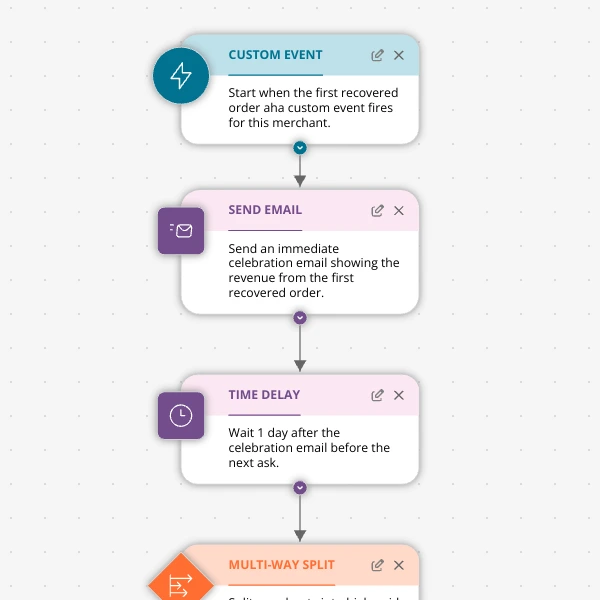
The Aha-Moment Playbook For Shopify Apps: Turn One Magic Action Into Months Of Revenue
A node-by-node playbook for Shopify and e‑commerce apps to center their lifecycle on one aha-moment custom event in Spreeflo, celebrate it, segment merchants by profile and engagement, and turn first recovered value into lasting revenue and retention.
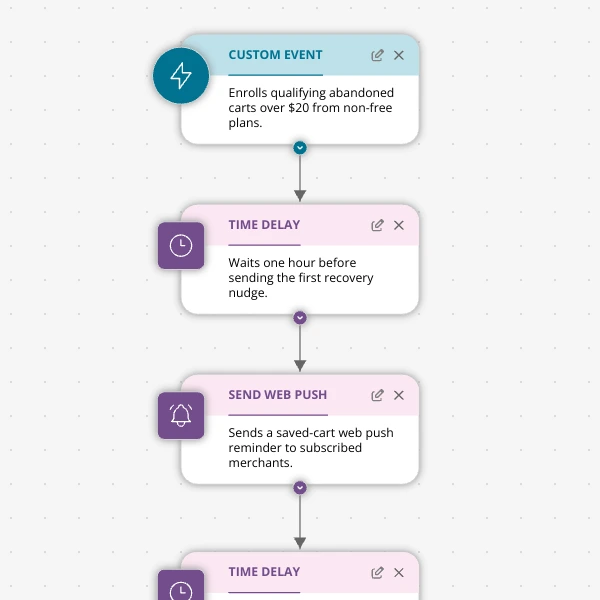
Stop Letting High‑Intent Carts Die: A 3‑Email Recovery Journey for Shopify Apps
A detailed, node-by-node walkthrough of a three-email (plus optional web push) cart-abandonment recovery journey for Shopify apps in Spreeflo, showing how to trigger events, branch on behavior, tag outcomes, and measure recovered carts and revenue.
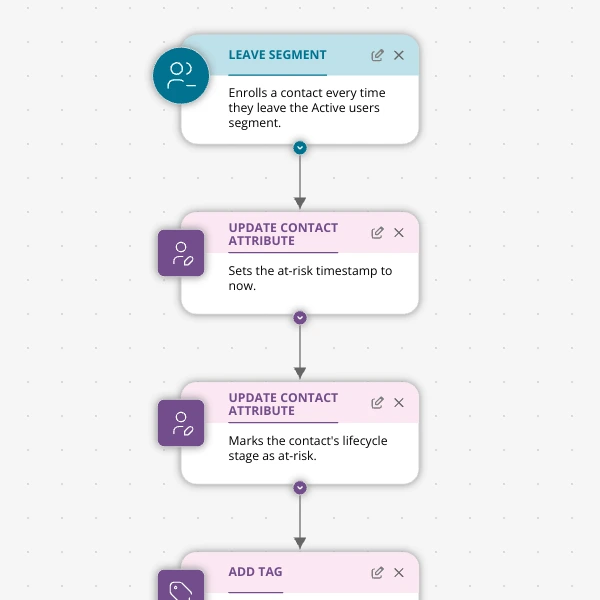
When Active Users Go Dark: A 4‑Touch Win‑Back Journey For Your Shopify App
A detailed, node-by-node Spreeflo journey for winning back previously active Shopify app users who stop engaging, using segment-based triggers, conditional logic, and a four-touch email plus internal alert sequence to recover usage and MRR.