Stop Emailing Ghosts: A Cold Contact Re‑Engagement Journey for SEO SaaS
A step-by-step automation playbook for SEO SaaS tools to re‑engage cold email contacts using a three‑email journey in Spreeflo, recover interested users, and automatically sunset disengaged subscribers to improve list health and deliverability.
Industry
Niche
Pattern
Loading sequence...
The fastest way to wreck your email list isn’t a spam complaint; it’s quietly sending the same “latest updates” to thousands of people who haven’t opened anything in months.
For an SEO SaaS like RankPulse or BrieflySEO, those ghosts are expensive. You’re paying to store and email them, they drag down open rates, and they hurt deliverability for the people who actually want to hear about your new rank-tracking features. The sequence at the top of this page is the whole journey, end to end, for fixing that.
In this playbook, we’ll build a cold-contact re‑engagement journey that:
Automatically finds subscribers who’ve gone quiet (no opens, no visits)
Runs a short, respectful three‑email “is this still useful?” sequence
Then either reactivates them or cleanly sunsets them from your marketing
We’ll use an example SEO SaaS, RankPulse, doing ~$35k MRR with a couple of thousand dormant subscribers sitting in their audience.
Why cold contacts are quietly leaking your LTV
For SEO SaaS, lifetime value is mostly determined by two things:
How quickly trial users become weekly users
How long paying customers stay before they churn
Letting people drift into silence after a few months and still emailing them forever is a double leak:
You never find out if they still want the product, so they quietly churn
Your deliverability slides as ISPs see a big pool of non‑openers
Most founders know they “should clean their list,” but manually pulling exports and pruning contacts is the first thing that slips. The fix is to turn it into one always‑on journey that decides, based on behavior, who gets re‑engagement and who gets sunset.
That’s exactly what this flow does.
Step 1: Decide who counts as “cold” for your app
Before you open the canvas, be clear on the rule that should enroll someone.
For an SEO SaaS, typical usage looks like:
Rank tracking: weekly logins to check movements
Content briefs: a few briefs per week for active teams, bursts around big campaigns
Technical audits: monthly or quarterly
So “cold” is rarely “no activity in 7 days.” It’s more like:
No email opens in 60–90 days, and/or
No product or site visits in 45–60 days
In Spreeflo, you express that via the Criteria Match trigger using the Segment Builder.
For RankPulse, we might define cold as:
Email subscription status is “Subscribed”
AND they have not opened any marketing emails in the last 60 days
AND they have not visited the app or website in the last 45 days
You’d set that up roughly as:
Email Activity: “did not open” any marketing emails, in the last 60 days
Page Visited: URL contains
/appor your main domain, “has not triggered” in the last 45 daysEmail Subscription Status: is “Subscribed”
Two key design choices here:
Include only subscribed contacts. You don’t want to accidentally re‑engage people who already opted out.
Use both email and web behavior. Some customers mute marketing emails but still log in regularly. You do not want to sunset those.
We’ll plug this criteria into a Criteria Match trigger in a moment.
Step 2: Build this as a continuous journey, not a one‑off campaign
This pattern should run forever. Anyone who crosses your “cold” threshold tomorrow, next week, or next year should get the same tight three‑email sequence.
That means you build it as a journey, not a one‑time campaign. If you’re new to that distinction inside Spreeflo, the campaign and journey automation guide is a quick primer.
On the canvas, you’ll:
Create a new Journey called “Cold Contact Re‑engagement – 60 days”
Add a Criteria Match trigger as the starting node
Configure it with the “cold” rules you just defined
Turn Re‑enrollment ON
Re‑enrollment matters. If someone goes cold again six months after being reactivated, you want them to re‑enter this journey. The mid‑journey lock still prevents duplicate concurrent enrollments; they have to exit before they can re‑enter.
Immediately after the trigger, add an Add Tag action:
Tag: cold_reengagement_2026
This gives you a quick way to:
Filter current re‑engagement cohort in your audience
Suppress them from other marketing while they’re in this delicate sequence
Then we’re ready for Email #1.
Step 3: Email #1 – the gentle “is this still useful?” check‑in
Add a Send Email node right after that tag.
This first email is not a promo blast. It’s a simple, honest check‑in that respects the reader’s time and attention. For example, RankPulse might send:
Subject: “Still want weekly rank insights from RankPulse?”
Body outline:
Acknowledge they haven’t opened anything in a while
Remind them of one clear benefit (“alerts when your top keywords drop”)
Offer two obvious choices:
A primary button: “Yes, keep me on the list”
A secondary text link: “I’m done, unsubscribe me”
The content is light, human, and to the point. You can build this quickly in Spreeflo’s email builder and save it as a template for re‑use across other flows.
In the Send Email node:
Select your sender identity
Choose this new “Cold Re‑engagement #1” template
Keep “Send only once” enabled so they never receive it twice, even on re‑enrollment
Now, respect pacing. Add a Time Delay node after Email #1:
Delay: 3 days
Unit: Days
That gives subscribers time to see and respond without you piling on.
After the delay, drop in a Check Email Activity process node attached to that first template:
Branch 1: “Opened” (high‑signal)
Branch 2: “Clicked” (even higher signal, but you can treat it the same)
Else branch: did not open / did not click
For the “Opened” and “Clicked” branches:
Add an Add Tag action:
reactivated_from_coldAdd a Remove Tag action: remove
cold_reengagement_2026End the path there
Anyone who even opens this email has raised their hand as still at least somewhat interested. There’s no need to nag them with another two “are you still there?” messages.
For the “Else” branch (no interaction), we’ll move on to Email #2.
Step 4: Email #2 – remind them why your SEO tool is worth attention
On the “Else” branch from the Check Email Activity node, add another Send Email action for your second touch.
Here you shift from pure consent check to a value‑forward reminder. For RankPulse, that might look like:
Subject: “Here’s what you’ve missed in your rank tracking”
Body themes:
2–3 concrete feature updates since they last engaged
A clear example of impact (“customers using our new cannibalization report saw a 12% CTR lift on key pages”)
A single focused CTA: “Log in and see your latest keyword movements”
This email should feel like a mini product tour curated just for lapsed users, not a generic newsletter.
Again, set “Send only once” on the node.
Then add another Time Delay:
Delay: 4 days
Unit: Days
After that delay, add a second Check Email Activity node pointing to Email #2’s template.
Branching logic:
If “Opened” or “Clicked”: treat as reactivated, just like branch 1. Add the
reactivated_from_coldtag, removecold_reengagement_2026, and end.Else: still cold. They move on to the final step.
You now have two chances for a quiet but clear “yes, keep me” signal before you talk about sunsetting them.
Step 5: Email #3 – explicit sunset and a clean break
For contacts who’ve ignored both emails, it’s time to be explicit.
On the unengaged path from the second Check Email Activity node, add Send Email #3.
This one should:
Say plainly what will happen
Make staying subscribed an active choice
Frame the sunset as protecting their inbox, not punishing them
Example framing for RankPulse:
Subject: “We’ll stop emailing you about rank alerts (unless you say otherwise)”
Body outline:
“You haven’t opened our last few emails, so we’re going to stop sending regular updates.”
“If you’d still like rank insights, click below and we’ll keep you on the list.”
A single button: “Yes, keep my SEO updates coming”
A reminder that they can always log in and use the product even if they don’t get marketing emails
Once again, set “Send only once”.
Then add a longer Time Delay:
Delay: 7 days
Unit: Days
After this, we make the final call. Add one more Check Email Activity node on Email #3.
Opened / Clicked branches:
- Tag asreactivated_from_cold
- Removecold_reengagement_2026
- End the pathElse branch: no interaction even after the explicit “we’ll stop” message
On that final else branch:
Add an Update Email Subscription Status action:
- Set status to “Email unsubscribed”Optionally add an Update Contact Attribute node to mark them as “Non‑marketing” for your internal reporting
Add a tag like
sunset_2026so you can report on how many contacts this flow retires over time
This is the structural moment where your list becomes healthier:
These contacts no longer receive campaigns or journeys
Your open and click rates climb
Complaint risk drops, because people who didn’t care enough to click “unsubscribe” are proactively removed
And you never had to run a manual cleanup.
Step 6: Add product behavior so you don’t cut active users
So far we’ve used email and page visits as proxies for engagement. For SEO SaaS, product behavior is often the stronger signal.
If you’re sending events from your app into Spreeflo (e.g. login, checked_rankings, generated_content_brief), you can make the journey smarter without making it more complex.
Two places to upgrade:
At the trigger: In your Criteria Match trigger, extend the condition with a custom event rule like:
At the wait steps: Instead of pure Time Delays, you can use a Wait Condition node. For example, after Email #2:
Custom event
loginhas not triggered in the last 45 daysCustom event
checked_rankingshas not triggered in the last 45 days
These events can arrive via the browser SDK (Spreeflo.track('checked_rankings', ...) in your frontend) or from your backend through the Spreeflo API. Use whichever matches where the action actually happens.
Condition group: “Email Activity – opened this email OR Custom event
logintriggered at least once in the last 7 days”Timeout: 7 days
That means:
If they re‑engage in the product, they’re treated as “back” even if they never open your email
If nothing happens by the timeout, only then do they see Email #3
To feed product actions into the journey, make sure you’ve set up web tracking and analytics in your app. Once the SDK (or API events) are in place, those events become first‑class filters inside the Segment Builder and Wait Condition nodes.
Step 7: Measure what matters, then tune
Three metrics tell you if this journey is doing its job:
Reactivation rate
List health
Complaint rate and unsubscribes
Of all contacts who enter the journey in a month, how many get tagged reactivated_from_cold instead of sunset_2026?
For a typical SEO SaaS, reactivating even 3–5% of cold contacts is meaningful
If this number is near zero, your offer may be too weak or your “cold” threshold too long
Watch your global opens and clicks on regular campaigns.
You should see average open rates climb as ghosts are removed
A healthier list also improves inbox placement for high‑intent launches (like new pricing pages, big feature releases)
The journey should reduce complaints, not increase them.
If complaints spike on Email #3, soften the tone or extend the delay between touches
If unsubscribes spike on Email #1, that’s still a win: people who really don’t want your content are opting out early, before they hurt engagement metrics
Over time, you can test variations using Random Split nodes inside the journey:
50% see a 60‑day cold threshold, 50% see 90‑day
Or test two different framings for Email #1
Because everything runs as a journey, you don’t need to rebuild the flow to try these; you just adjust the nodes.
Why this journey earns a permanent place in your stack
Most SEO SaaS founders obsess over new trials and organic traffic. That’s rational. But the quiet loss usually happens later, when once‑engaged subscribers go dark and nobody notices.
This cold re‑engagement journey plugs that leak in three ways:
It recovers a slice of lapsed users who still care about rankings but tuned out your emails
It keeps your audience full of people who actually open and click, which makes every launch email more effective
It protects deliverability and reduces wasted spend on people who have effectively churned
And once you’ve built it, it just runs. No exports, no manual pruning, no “we should really clean our list this quarter” guilt sitting on your plate.
If you want to go deeper, the docs on campaign and journey automation and the Segment Builder walk through every node you saw in the sequence at the top of this page. When you’re ready to plug it into your own numbers and contact limits, you can sanity‑check costs against Spreeflo’s pricing.
The bigger idea is simple: you can’t grow lifetime value from people who stopped listening. A small, honest, automated sequence like this makes sure you either win them back or let them go – and your email list, and revenue, are healthier for it.
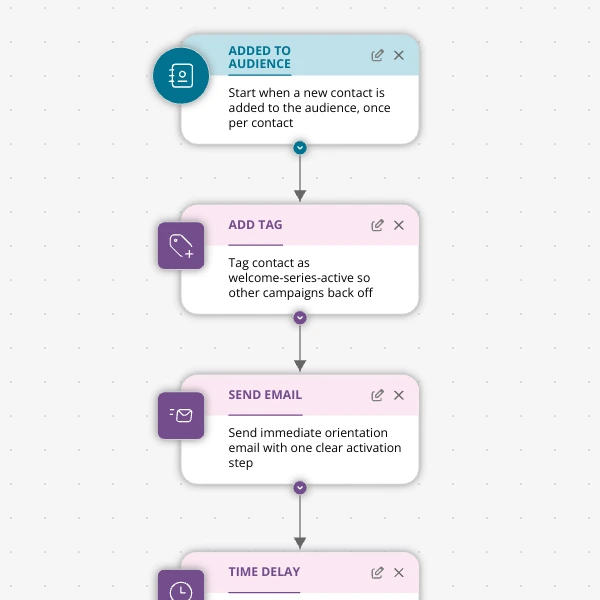
The Shopify app welcome series that turns installs into income
A step-by-step Shopify app welcome email journey for tools like CartSpark, showing how to turn new installs into activated, retained merchants using Spreeflo journeys, tags, and behavioral triggers so fewer trials quietly churn and more trials convert.
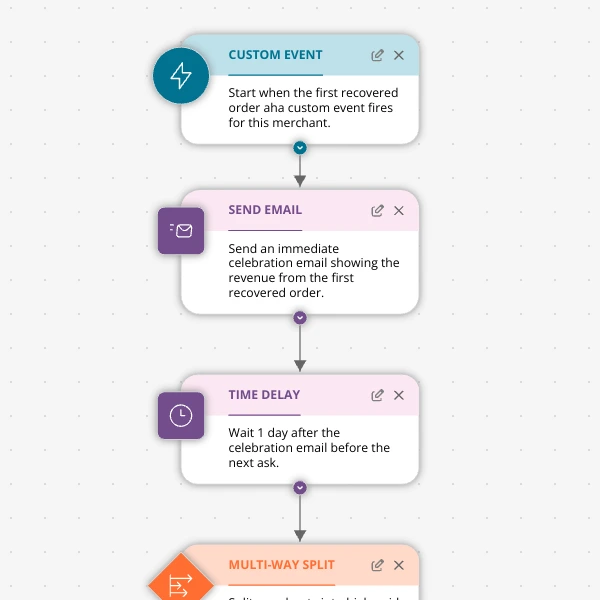
The Aha-Moment Playbook For Shopify Apps: Turn One Magic Action Into Months Of Revenue
A node-by-node playbook for Shopify and e‑commerce apps to center their lifecycle on one aha-moment custom event in Spreeflo, celebrate it, segment merchants by profile and engagement, and turn first recovered value into lasting revenue and retention.
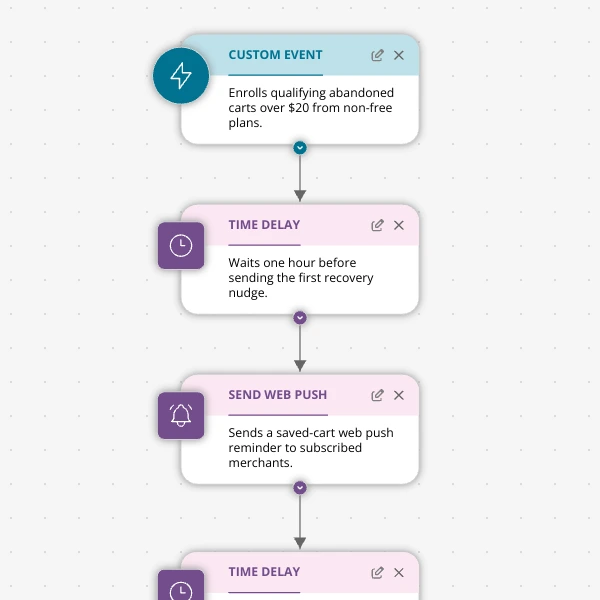
Stop Letting High‑Intent Carts Die: A 3‑Email Recovery Journey for Shopify Apps
A detailed, node-by-node walkthrough of a three-email (plus optional web push) cart-abandonment recovery journey for Shopify apps in Spreeflo, showing how to trigger events, branch on behavior, tag outcomes, and measure recovered carts and revenue.
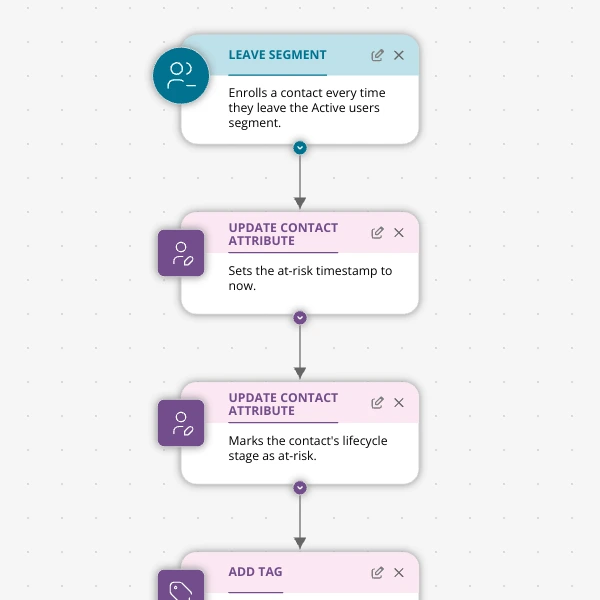
When Active Users Go Dark: A 4‑Touch Win‑Back Journey For Your Shopify App
A detailed, node-by-node Spreeflo journey for winning back previously active Shopify app users who stop engaging, using segment-based triggers, conditional logic, and a four-touch email plus internal alert sequence to recover usage and MRR.